Kyungnam University Hospital Radiology · First External Pilot
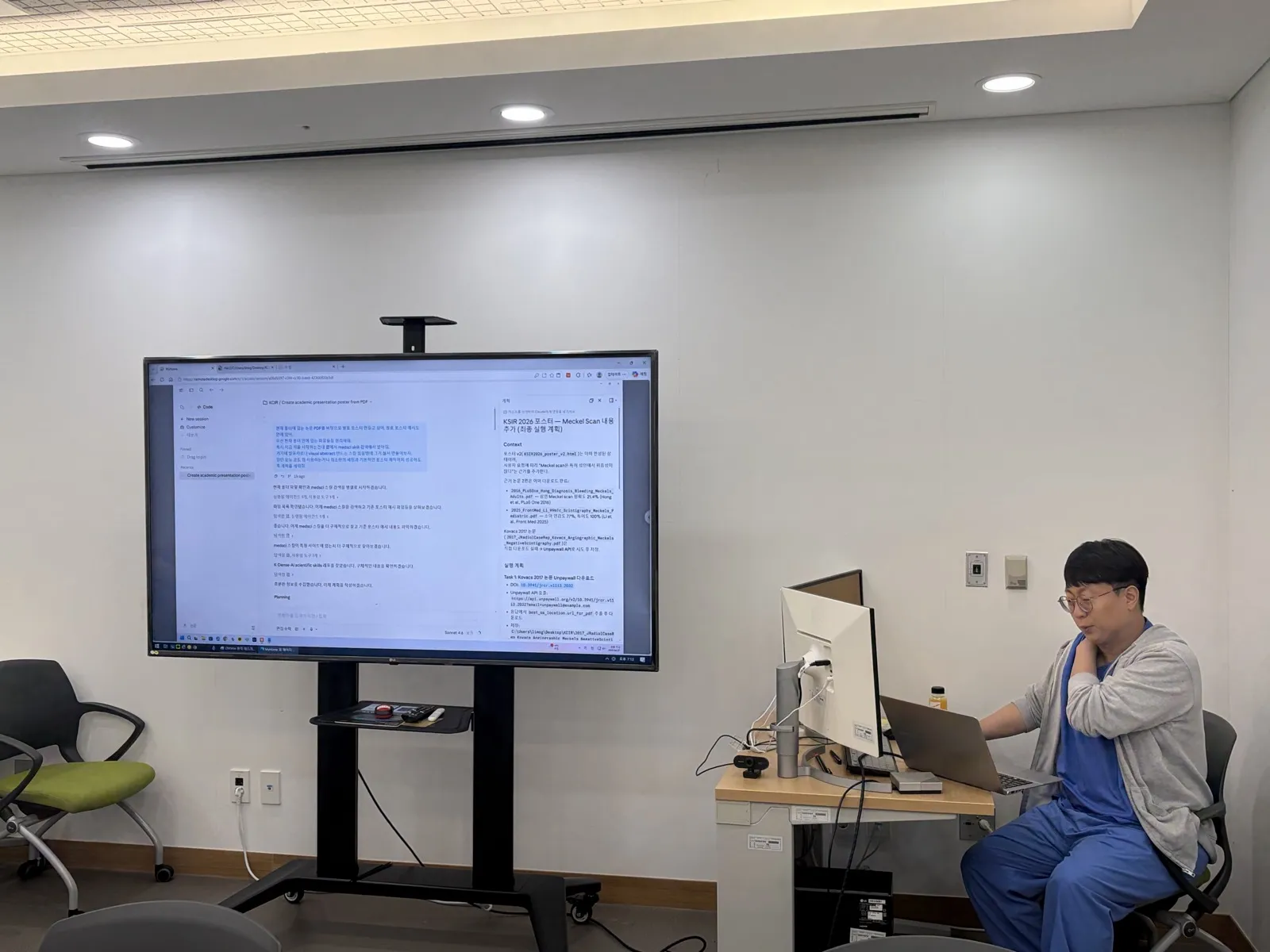
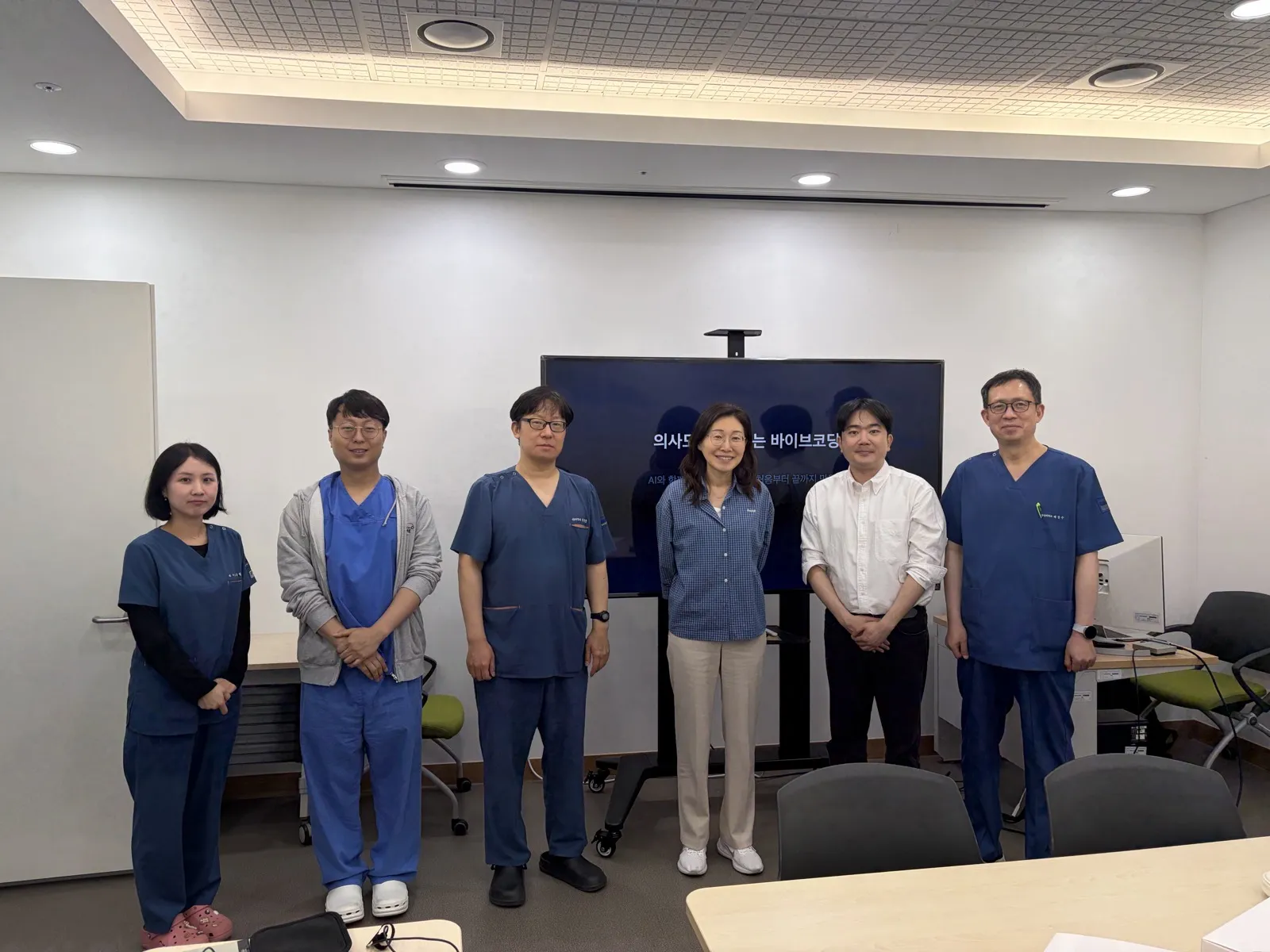
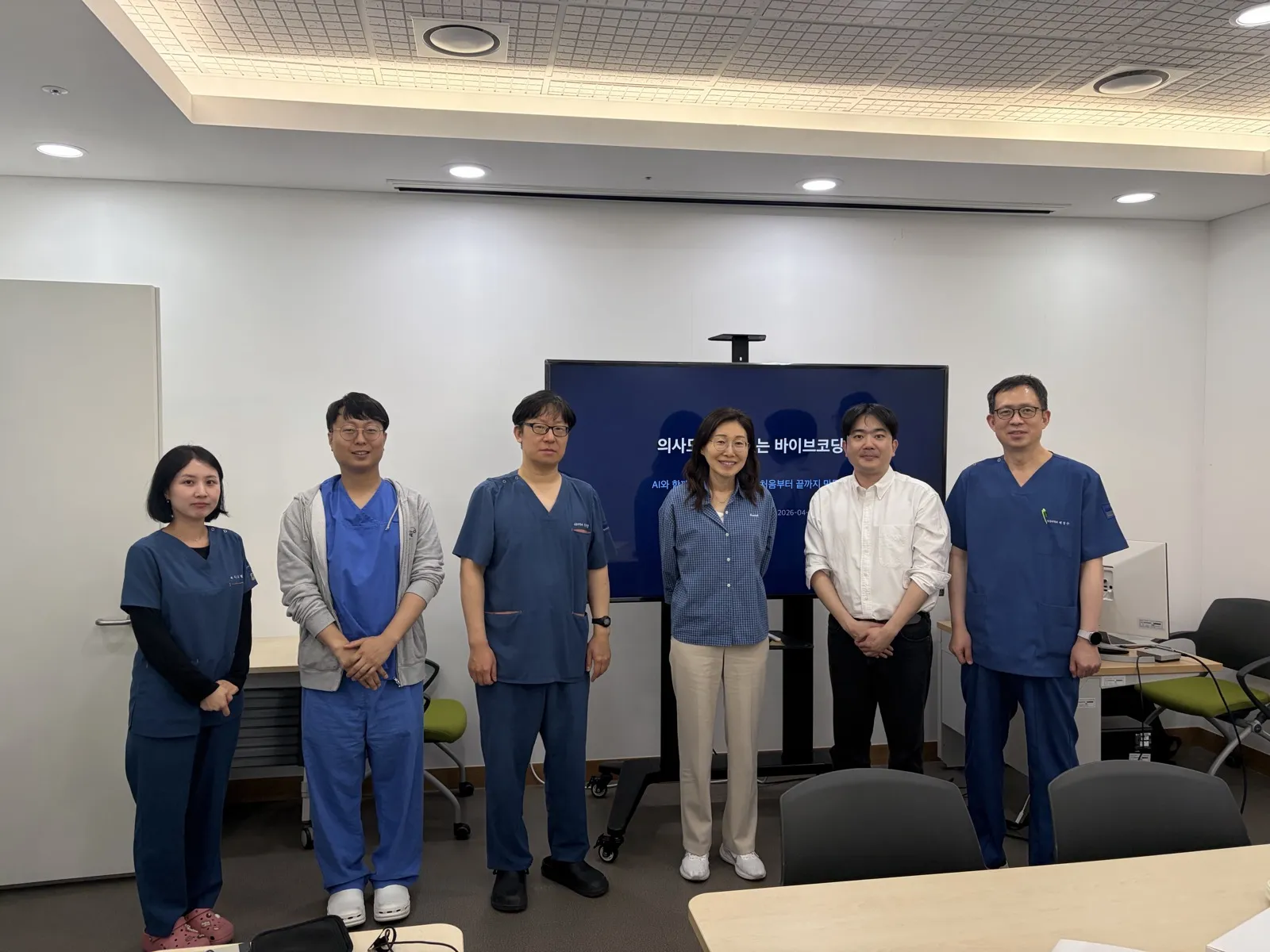
The first AI vibe coding workshop outside my home hospital. Four hours, radiology faculty and residents, each working on their own data and producing a first table, figure, or app screen.
Overview
- Date: Monday, 27 April 2026, 17:00 – 21:00 (4 hours)
- Venue: Department of Radiology, Kyungnam University Hospital
- Attendees: ~8 radiology faculty and residents
- Format: Hands-on with two parallel tracks — research and build (Claude Desktop, personal laptops)
Why this workshop
This was the first workshop outside my home hospital, run two weeks after the Samsung Changwon pilot. The biggest lesson from the pilot was that the differentiator is not "talent" — it is simply who starts moving their hands first. The open question was whether the same pattern would hold for a more varied audience.
Radiology is a field where research data exists but the analysis stalls. The pre-survey confirmed it — most participants said, "We have the spreadsheet. What we don't know is what comes after that." So the workshop was designed around two tracks: a research track (data → first table and figure) and a build track (websites, apps, automation). Every participant came in with one concrete problem they were already facing.
What participants built
- One faculty member produced a first Table 1 and a Kaplan–Meier curve from their own imaging dataset within four hours.
- Another sketched the first screen of a reporting reference tool that fit their day-to-day workflow.
- Residents focused on workflows for the immediate week: presentation slide automation, abstract polishing, conference submission editing.
The most striking pattern: once the awkward first thirty minutes are over, every participant realises almost immediately that their own domain knowledge is the weapon. A single sentence like "this variable is encoded like X" — passed verbatim to the AI — produces analysis code that respects the definition. After that first success, the room moves faster than the instructor.
What I learned
A pre-install guide saves the first thirty minutes. After Windows Git installation ate up time at the Samsung Changwon pilot, this workshop went out with a one-week pre-survey and an OS-specific install guide. The whole four hours could be spent on actual work rather than setup.
Two-track branching works. When the audience contains both "I urgently need research output" and "I urgently need a clinical tool" people, splitting them and letting each side move at their own pace produces much higher satisfaction than a uniform agenda. This pattern grew into the five-track structure used in the later workshops at PNU and Kosin.
What comes next
People who leave with a first concrete result keep moving at their own pace the next day, without needing the instructor anymore. Helping someone unstick once in the room, and letting them carry that unstuck pattern forward — that compounds far longer than any single workshop session.
Thanks to Professor Kyung Nyeo Jeon for hosting and introducing me to the department.
Voices from the room
“The table I made today is going into next week's conference abstract.”
“I've never coded once in my life, and four hours later I had the first figure from my own data.”
“I didn't realise this was possible. I want to show this to my colleagues.”