Samsung Changwon Hospital · Hospital-wide Hands-on, Five Tracks, 37 Attendees
Faculty, residents, nurses, administrative and IT staff in one room for three hours. Five tracks pre-mapped from a pre-survey, with a main demo built on the hospital's health-checkup data so any department could follow.
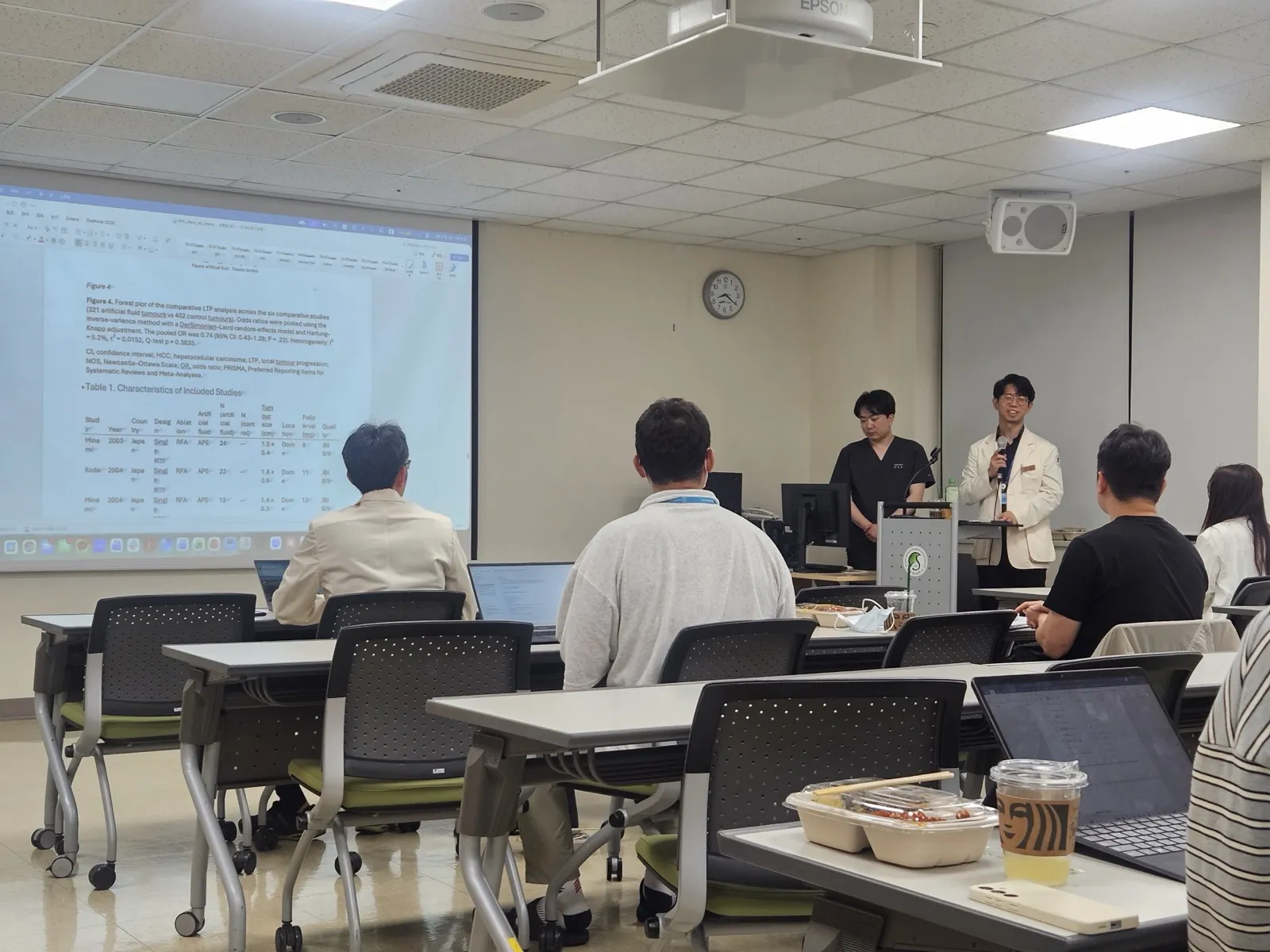
Overview
- Date: Tuesday, 12 May 2026, 18:00 – 21:00 (3 hours)
- Venue: Hospital conference room, Samsung Changwon Hospital
- Attendees: 37 pre-registered (18 faculty, 8 residents, 5 nurses, 3 admin, 1 pharmacist, 1 IT, 1 other)
- Format: Hands-on with five-track branching (Claude Desktop + Claude Code, personal laptops)
Why this workshop
At the end of the first hands-on (14 April, 9 radiologists), a senior faculty member said "tell the other departments too." That sentence was the starting point. A month later, 37 sign-ups, spanning every role, OS, and experience level. Most notably, six general internists signed up together — same reason from all of them: "the health-checkup data is piling up but we can't get past the spreadsheet stage."
So the main demo was rebuilt around exactly that flow: a Table 1 and a distribution figure from the hospital's health-checkup data. Not just for general internal medicine — any department with data but stuck analysis could follow the same path.
The pre-survey responses drove a five-track structure: (A) first Table and Figure from data, (B) hypothesis refinement and abstract scaffolding, (C) complex analysis design (pharmacy time-to-event, infectious disease meta-analysis, etc.), (D) admin and IT automation, (E) personal data builds.
What participants built
The moments that drew the strongest reactions:
- Health-checkup data → Table 1 + distribution figure in a ten-minute live demo. All six general internists left saying "let's pull the data tomorrow."
- Cardiology graphical abstract in five minutes. A first slide came out in front of the room, and the energy shifted.
- Pharmacy time-to-event analysis design — a skeleton for an analysis that had been stuck for weeks, sketched out in one sitting.
- Infectious-disease meta-analysis track — search → data extraction → forest plot, shown end-to-end within an hour.
- Admin team's automated meeting minutes and announcement-variant generation — multiple comments that they would use it in the very next meeting.
The real asset of an internal hospital workshop is that after the session, you can ask the person next to you. In the 30-second spotlight round at the end, nearly thirty people shared their result in one line each, and on-the-spot "who did this one?" matchmaking started right there.
What I learned
A pre-survey is half of the track design. You cannot run 37 people on a single rail. By collecting role, OS, AI experience, and what you want to build in advance, the room split cleanly into five tracks — with a main demo that any of them could adapt.
The 86% Windows reality. A few path and environment-variable issues surfaced in materials that had been authored on a Mac. The install guides were tightened further before the next workshops (PNU and Kosin).
The "co-instructor" pattern emerged. Participants running their own track started spontaneously helping the person next to them in five-minute bursts. This pattern was reused intentionally at the later workshops.
What comes next
The real effect of a hospital-wide workshop shows up a month later. When participants start walking into the next meeting with their own slides built from what they learned, AI tools shift from being a training topic to being the team's shared vocabulary. That shift is what we carried into the next two workshops at Pusan National University and Kosin University.
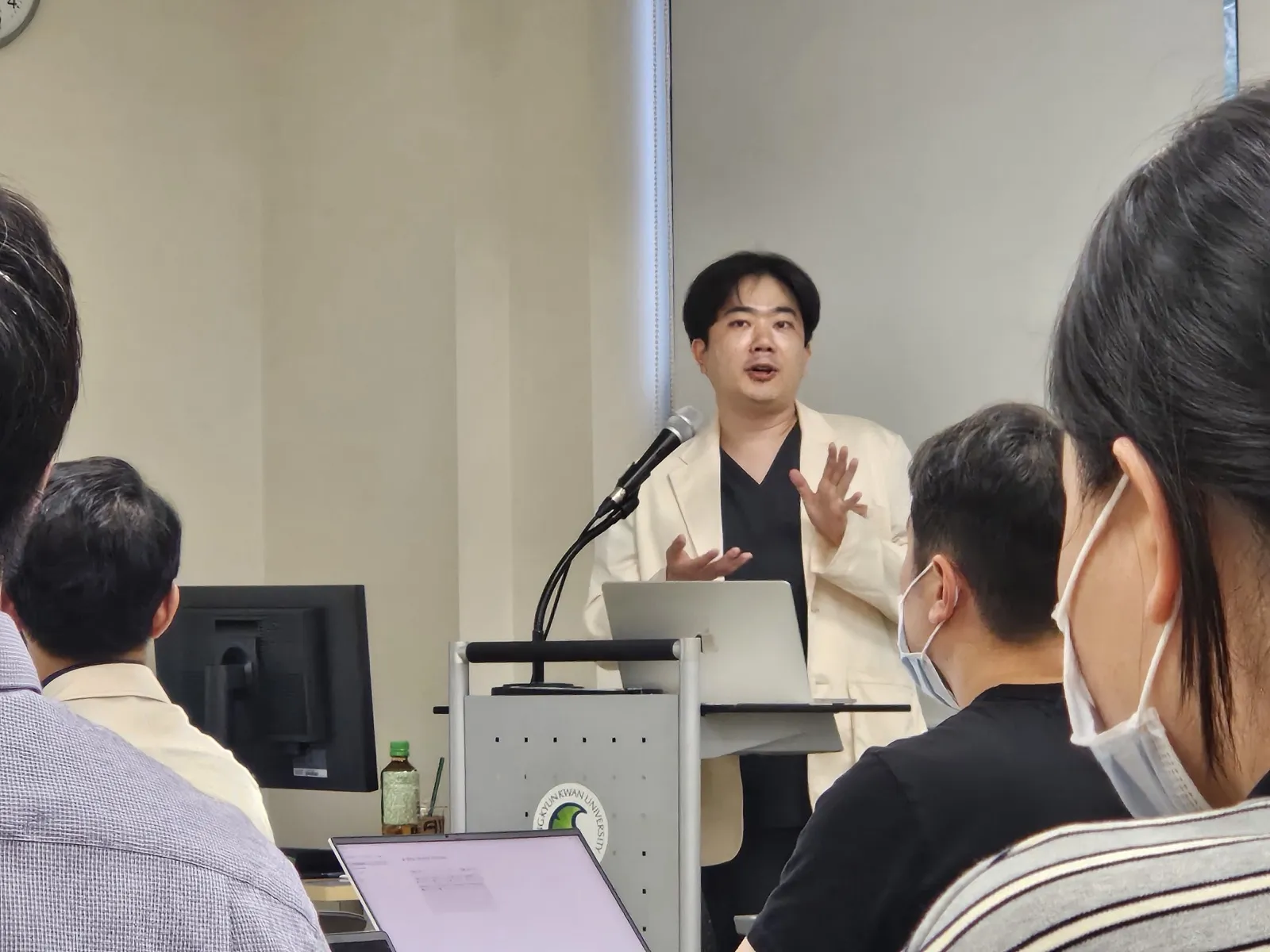
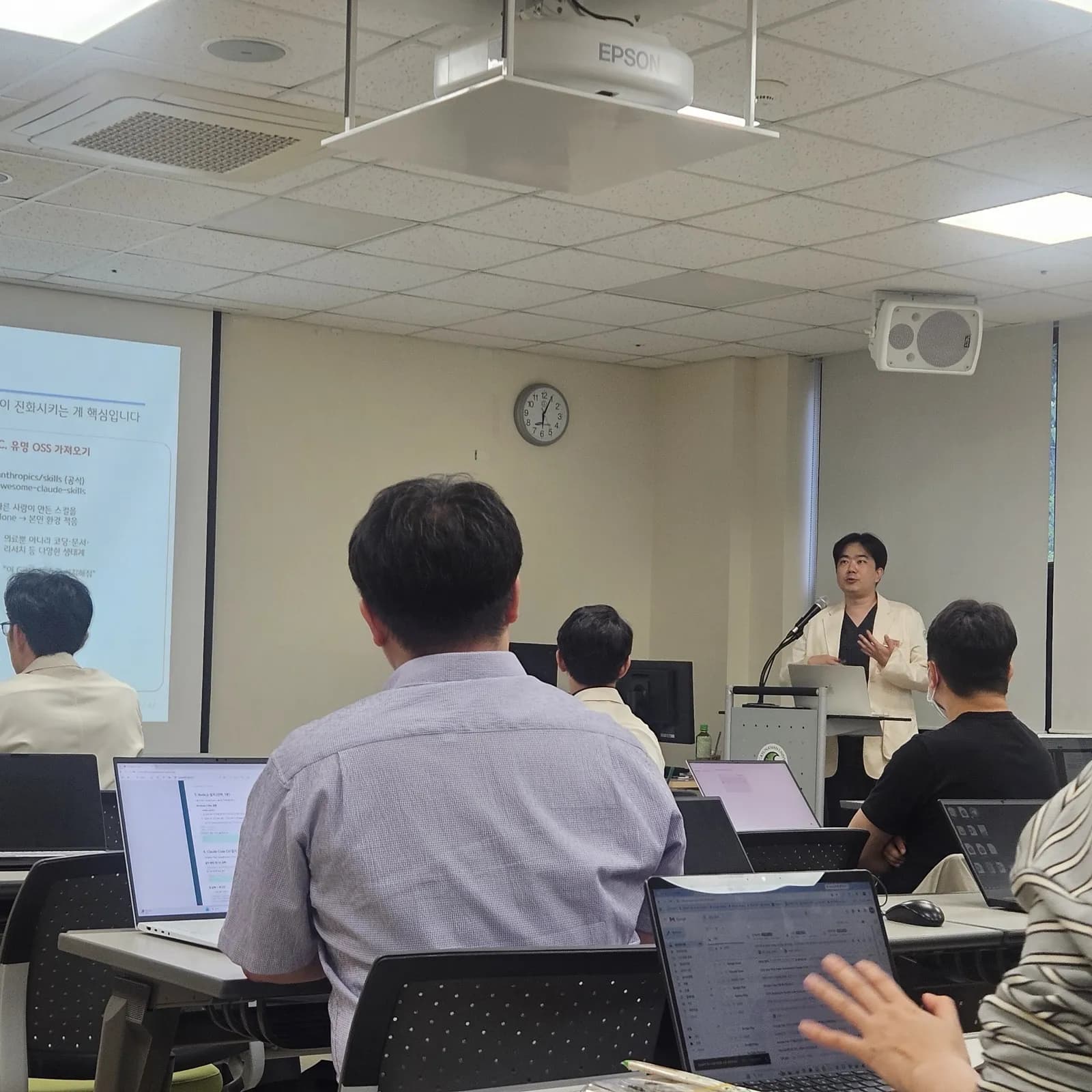
Voices from the room
“We had the data piling up but always stopped at analysis. Today was the first time we got a Table 1.”
“Building a graphical abstract in five minutes was the biggest shock.”
“Auto meeting-minutes — I'll use this in next week's meeting.”