Samsung Changwon Hospital AI TF · Administrative & Operations Automation
The first session with a non-clinician audience. Three live demos — outpatient/inpatient spreadsheet automation, meeting-minutes summarisation, and announcement variants — on the operations work that repeats every week.
Overview
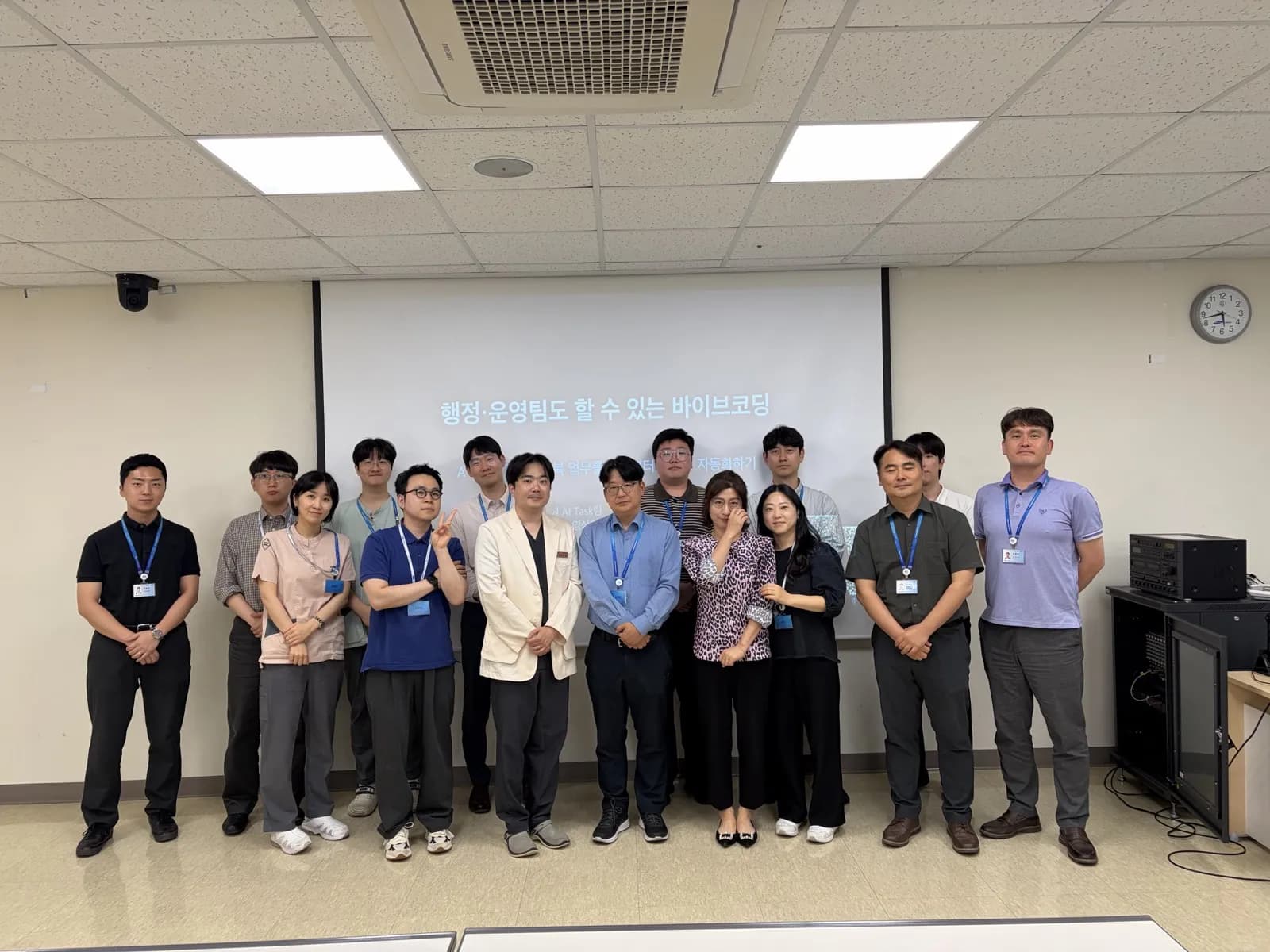
- Date: Thursday, 14 May 2026, 16:00 – 17:30 (90 minutes)
- Venue: Conference room, Samsung Changwon Hospital
- Attendees: 12 (6 admin, 1 registration, 1 insurance review, 2 nursing, 2 IT)
- Format: Three live demos + first-line hands-on on each participant's own work
Why an admin-only session
In the hospital-wide workshop two days earlier, administrative and IT staff fed back that "in a clinician-majority room, it's harder to bring our own work to the front." So 90 minutes were carved out specifically for the operations side of the hospital, two days later.
This was the first time I spent 90 minutes with a non-clinician audience. Clinical metaphors (diagnose, treat, patient) were intentionally removed; the starting point was the work that repeats every week. The three demos came directly from the top three pre-survey items — (1) outpatient/inpatient spreadsheet automation, (2) automated meeting minutes, (3) announcement variants for patient/department/complaint contexts.
What participants built
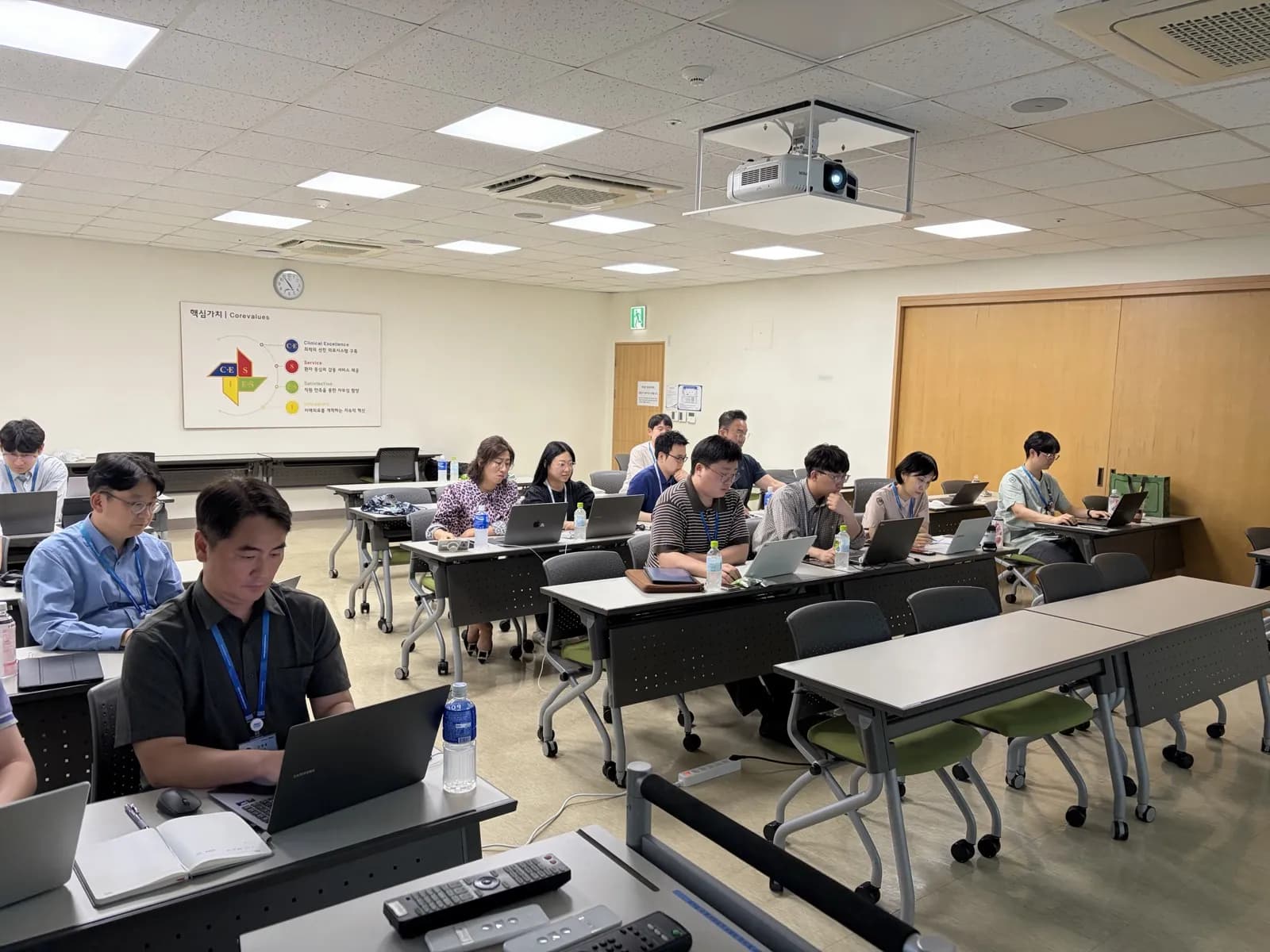
- All 12 completed Claude login and watched all three live demos through to the end.
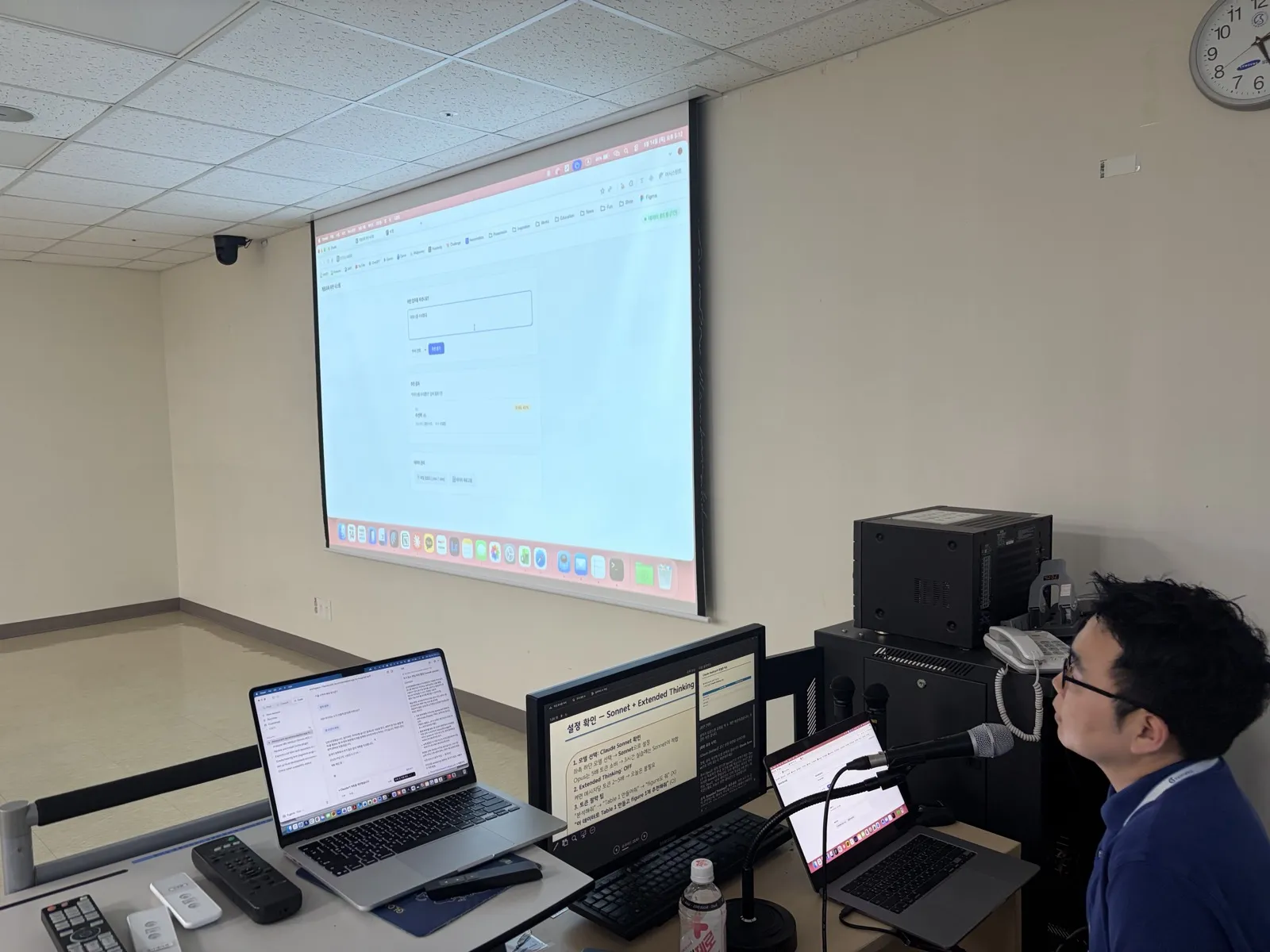
- Spreadsheet automation demo — a flow they cleaned by hand every week, automated live in one pass. The strongest reaction was "so this is possible."
- Meeting-minutes automation — from a transcript to decisions, action items, and a draft email. The strongest reaction came from departments with the most meetings.
- Announcement variants — generating patient-facing, department-facing, and complaint-response versions from a single keyword. Immediately applicable to insurance review and patient complaint workflows.
- In the hands-on segment, the majority of the 12 ran the first line of their own spreadsheet automation.
The most striking pattern was a sentence I rarely hear from clinician audiences: "can we make this our team's shared macro?" — i.e. an immediate team-level application prompt. Healthcare operations is the domain where AI automation pays off fastest, because the repetitive work is clearly defined and the unit of application is the team.
What I learned
Dropping clinical metaphors lowers the barrier. Analogies like "how do you classify a patient" — which work well with clinicians — felt distant to admin staff. Reframing the same concept as "how do you classify rows in a spreadsheet" opened the door for first-time AI users immediately.
Operating with a low Pro-subscription ratio. Of the 12 participants, only 3 had Pro. The hands-on pace was set to first line on the free tier, while the live demos were run by the instructor on Pro and treated as watch-first. Trying after seeing a first concrete output was the most stable rhythm.
What comes next
Workshops for healthcare operations have the fastest verifiable payoff. Automating one weekly task returns that time immediately. The hope is that the team-shared skill ideas that started here become standard department workflows within the next quarter.
Voices from the room
“I was spending two hours every week cleaning up an Excel file. After running the first line myself, it looks like 30 minutes is enough.”
“Auto meeting-minutes — I will apply this in next week's department meeting.”
“This was my first time using AI properly, and not having clinical metaphors actually made it easier to follow.”