Seoul National University Bundang Hospital · Senior Faculty Vibe Lab, Session 2
The second meeting of a senior-faculty core group that had already installed Claude Code. Starting from skills, MCP, and harness concepts, the session moved into hands-on runs of medsci-skills — and one attending professor got a 'statistically significant result' for the first time on an ML model that had refused to converge for weeks.
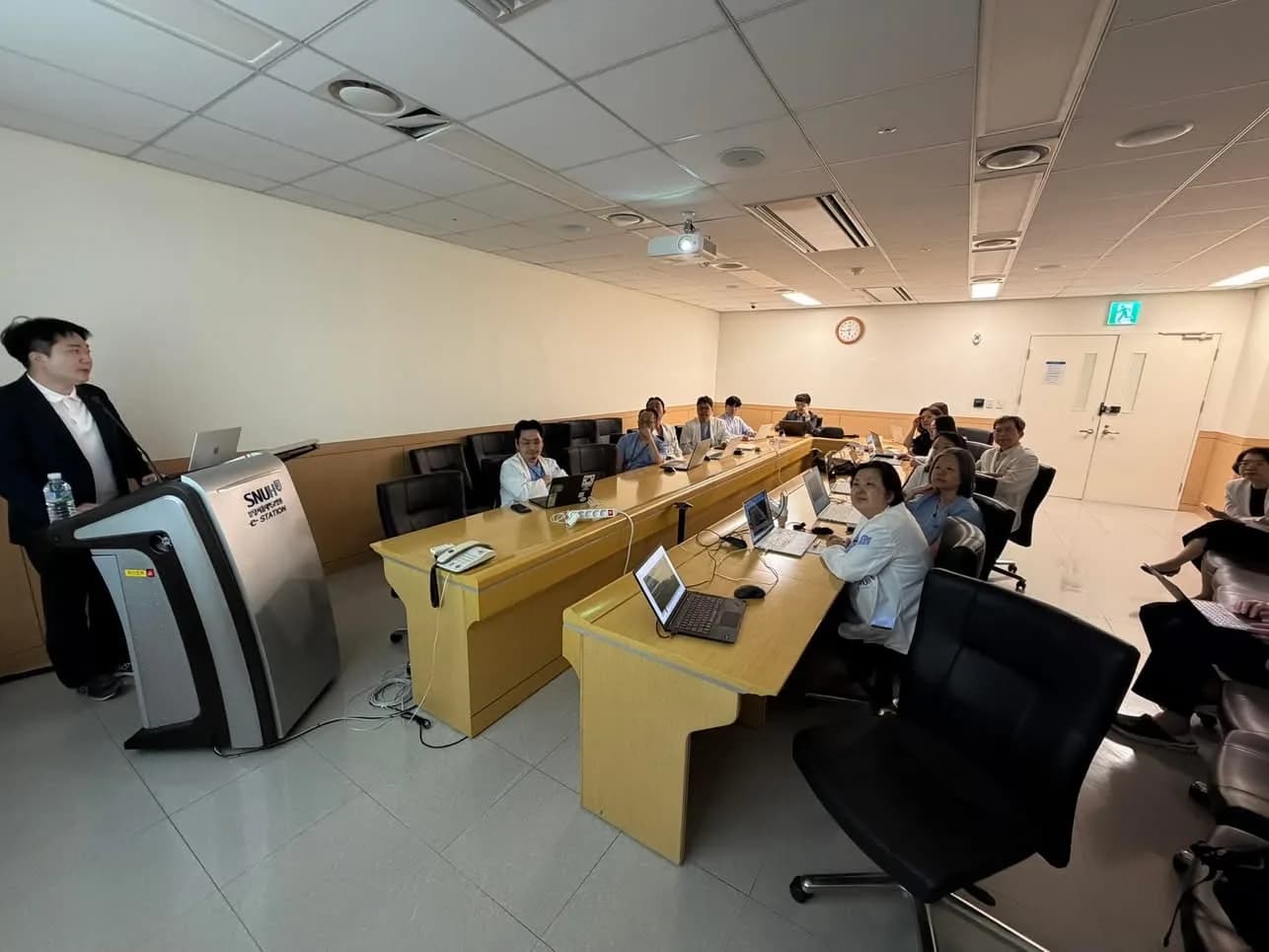
Overview
- Date: Tuesday evening, 23 June 2026
- Venue: Conference Room 4, Seoul National University Bundang Hospital (Bldg 2, 11F)
- Attendees: Senior-faculty core group (Claude Code already installed, with one prior practice session)
- Format: Concepts of skills · MCP · harness → medsci-skills demo → hands-on (run it yourself) with continuous Q&A
Why this session
This was the second meeting of the senior-faculty Vibe Lab core group led by Professor Sung-Il Hwang at SNU Bundang Hospital. Everyone had already finished sign-up and laptop setup at the first meeting, so this time the focus was not "installation" but running the harness yourself and getting a result out.
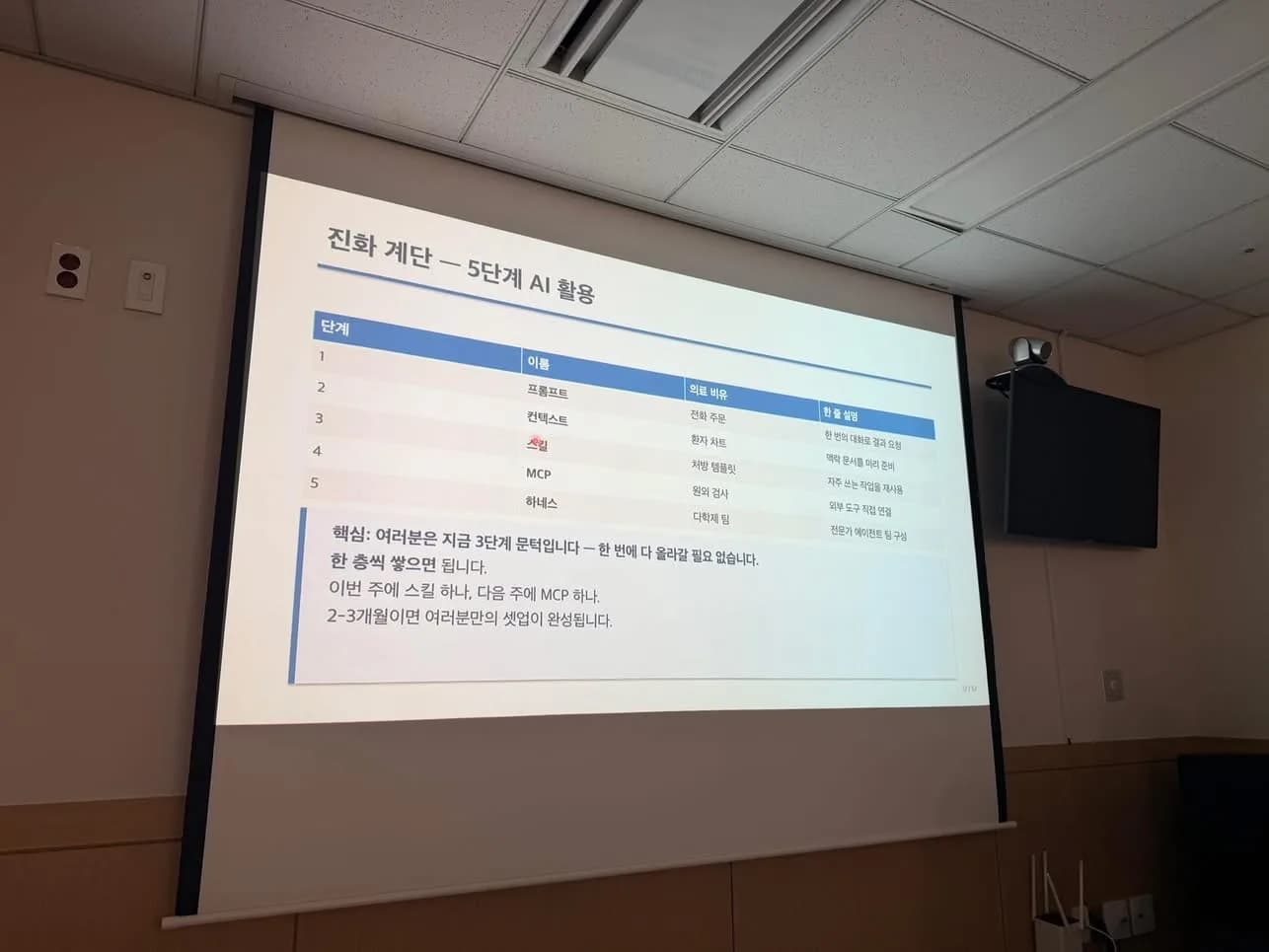
The core message was simple. On the five-step ladder — prompt → context → skill → MCP → harness — senior faculty are already standing at the third rung. You don't have to climb it all at once; you stack one layer at a time. So most of the session went not into explaining concepts but into a hands-on where each person ran their own data and their own research right there.
What happened
The most memorable moment came from one attending professor. They had been wrestling with machine-learning prediction and clustering models that simply wouldn't yield meaningful performance — to the point of being told "a model that won't build is itself a fine finding." But while the talk was running, they pushed the same data through medsci-skills a few times, and for the first time it came back with "this is a significant result." They said they almost shouted out loud.
That scene captures the day. A harness is not merely the architecture Claude works in — it is a tool whose output itself changes with how carefully it is designed. Same data, same model, and yet the harness it runs on can change the result.
The hands-on was energetic, the Q&A never stopped, and questions flowed straight into implementation. It was a session where people confirmed by hand both how skills work and how Claude Code can be used in medical research.
What we learned
Sitting in the audience after having been the organizer, the host professor's framing stood out: how do you narrow the gap between very different participants, and how do you prevent drop-out? Even in the same room, one person is focused on getting a first screen up while another is running a model on their own cohort. Closing that gap is the real operational challenge of a hands-on group.
And the ultimate goal of this group is not lectures but everyone bringing their own experience to show & tell. It is evolving beyond a one-instructor-teaching structure into a community where each member brings a small win from their own setting and shares it. Tangible results are starting to appear, one by one.
Looking ahead
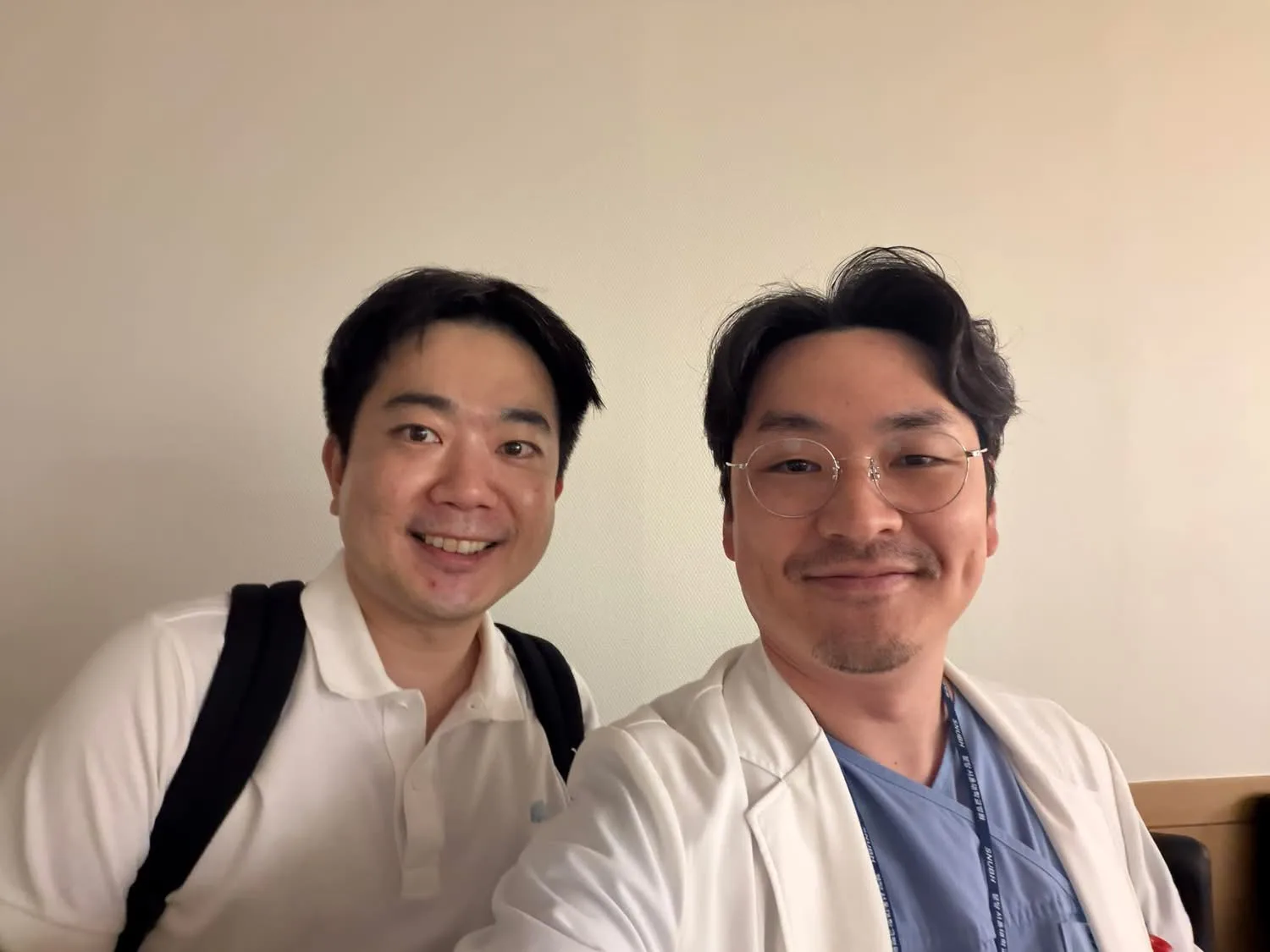
Deep thanks to Professor Sung-Il Hwang for creating the space and joining as an audience member, and to the Vibe Lab core-group faculty. For a group that has already finished setup, a hands-on where each person runs their own data and gets a result works far more powerfully than a demo-driven lecture — and this day confirmed it again. Our experiment continues.
Voices from the room
“While the talk was running, I re-ran a model that hadn't worked for weeks through medsci-skills a few times — and it finally came back significant. The first time I saw 'this is a significant result,' I almost shouted.”
“I'd thought of a harness as just the architecture Claude works in. This made me feel how the output itself changes depending on how carefully you build the harness.”
“An energetic hands-on with non-stop Q&A that flowed straight into implementation — I came away really feeling how skills work and how Claude Code fits into medical research.”